Introduction

If youâve ever watched a perfectly aimed shot end in a frustrating miscue, you know the feeling. The tip slides off the cue ball at the worst possible moment, your position is blown, and youâre left wondering what went wrong. More often than not, the problem isnât your stroke â itâs your chalk. The best cue chalk for pool does one thing above all else: it prevents that slip. This article is for players who are tired of miscues and want a practical breakdown of which chalks actually work, which ones are worth the money, and how to use them properly. No hype, no magic claims â just what works on the felt.

Why Chalk Quality Matters for Miscues
A miscue happens when the tip loses friction against the cue ball at the moment of impact. Instead of grabbing the surface, it slides off, sending the ball in an unintended direction with little to no spin. The physics are straightforward: chalk is a friction agent. It creates microscopic texture on the tip that bites into the cue ballâs surface. Without enough friction, the tip slips â especially on off-center hits where youâre trying to generate spin.
Chalk composition plays a bigger role than most players realize. Traditional pool chalk is a mix of powdered silica for grit, a binding agent to hold it together, and sometimes a colorant. The ratio of these ingredients determines how well the chalk grips, how much dust it produces, and how long it stays on the tip. Cheaper chalks often use less silica and more binder, which means less grip and more slipping â exactly what you donât want on a cut shot with english.
Moisture is another factor. Humidity affects how chalk adheres to the tip. In a damp room, some chalks turn into a paste and lose their grip. Others, designed with moisture resistance, hold up better. Tip shape also matters: a dime-radius tip has less surface area than a nickel, so it needs chalk that bonds more aggressively. The right chalk wonât fix a damaged tip or a bad stroke, but it raises the floor on your consistency. You stop wondering whether the next shot will grab or slip, and that confidence alone improves your game.
For players dealing with humid conditions, a chalk with better moisture resistance is worth considering. Those who play regularly in varying environments may want to look at humidity-resistant pool chalk options to maintain consistent grip.
What to Look for in Cue Chalk for Less Miscues
Choosing chalk isnât complicated once you know what to look for. Here are the key factors that separate effective chalk from the rest.
Grit level. This is the most important variable. Higher grit means more friction, which means fewer miscues on off-center hits. But higher grit also means more abrasion on your tip, so youâll need to shape and scuff more often. Lower grit is gentler but offers less grip. Itâs a tradeoff between performance and maintenance.
Application ease. Some chalks bond immediately with a simple twist. Others require a deliberate scrubbing motion to get even coverage. If youâre chalking between every shot, you want something that goes on clean in one or two rotations â not something that requires ten passes and still looks patchy.
Staying power. How long does the chalk stay on the tip? Good chalk forms a durable layer that survives multiple hits. Cheap chalk flakes off after one or two shots, forcing you to reapply constantly. In practice, that means more time fiddling with chalk and less time focusing on your next shot.
Dustiness. This is where personal preference comes in. Grittier chalks tend to produce more airborne dust, which settles on the cloth, rails, and your shaft. Low-dust options exist, but they sometimes sacrifice grip. If youâre a neat freak or play in a pool hall that takes cleanliness seriously, dust matters. If youâre just trying to win your league match, itâs lower on the priority list.
Tip compatibility. Soft tips absorb chalk better than hard tips, so theyâre more forgiving with lower-grit chalks. Hard tips need the extra bite from high-grit chalk to grip effectively. If youâre using a hard tip with cheap chalk, youâre setting yourself up for miscues.
Traditional cube chalk is still the standard for a reason: it works, itâs cheap, and every pool hall has it. But specialty chalks from brands like Kamui and Taom offer measurable improvements in grip and consistency â if youâre willing to pay for them. The sections below break down the best options in each category.
Best All-Around: Masters Premium Chalk
Masters is the baseline. Itâs the chalk youâll find in most pool halls, bars, and league rooms across the country. And honestly, itâs good. For the price â usually around a dollar per cube â it offers consistent performance that works for the vast majority of players.
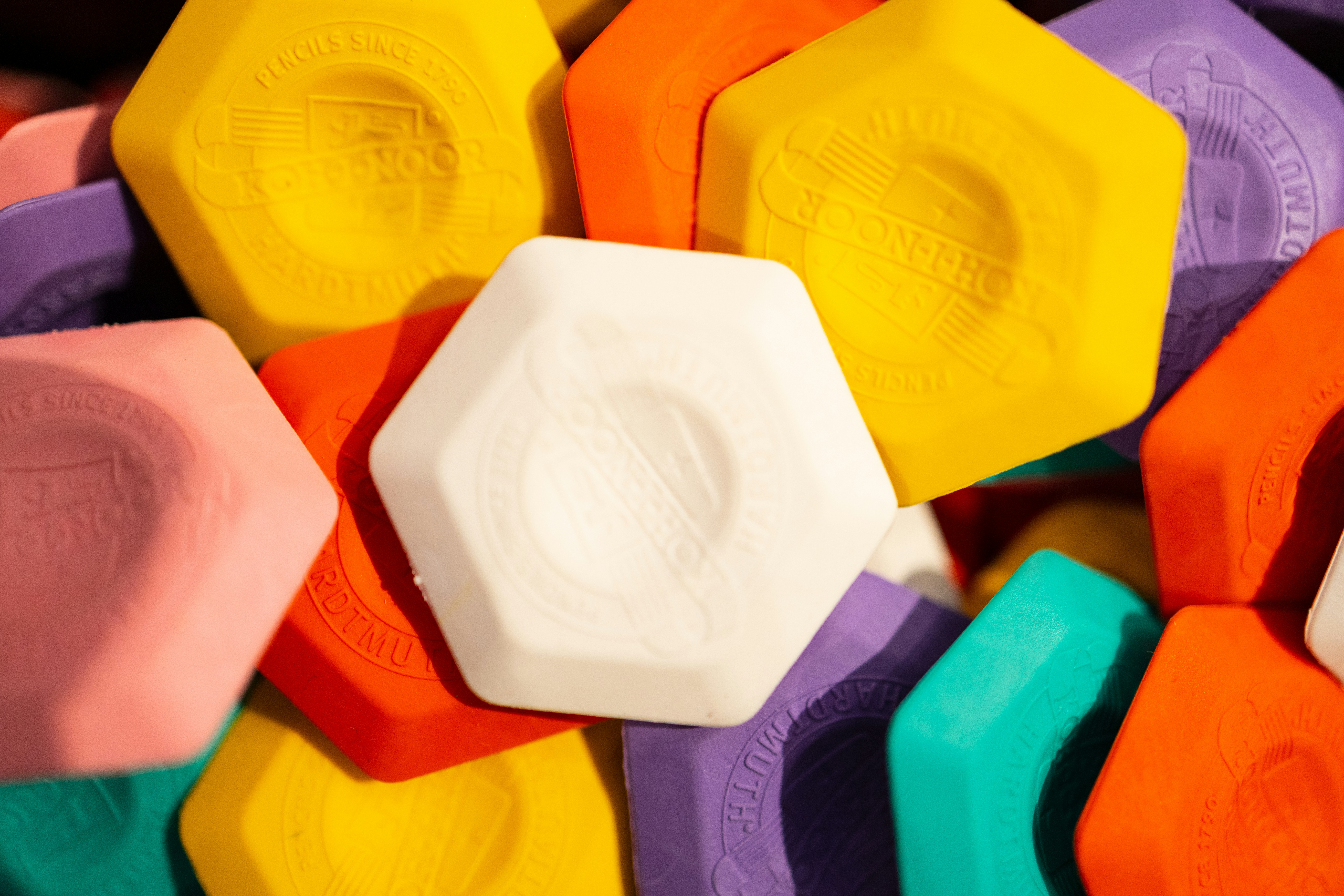
In practice, Masters holds up well in normal humidity. It applies evenly with a light twist, stays on for three to five hits depending on shot speed, and produces a moderate amount of dust. Itâs not the grippiest chalk on the market, but itâs reliable enough that most miscues with Masters are the playerâs fault, not the chalkâs. Iâve used it in leagues for years and never felt it was holding me back.
Best for: Intermediate players, league play, bar tables, anyone who wants a solid all-rounder without overthinking it.
Not for: Players who need extreme grip on off-center hits, or players who want minimal dust on their shaft. If youâre breaking hard or using heavy english on every shot, youâll notice the limit of Mastersâ grip.
If youâre looking for a cube to stick in your case for everyday play, a reliable pack of Masters premium pool chalk is a solid choice that wonât break the bank.

Best for Low Miscues: Kamui Chalk
Kamui changed the conversation about cue chalk. Their line â particularly the 0.98 and 1.21 grit levels â is designed specifically to reduce miscues on off-center hits. The higher grit creates a mechanical bond with the cue ball that feels noticeably different from standard chalk.
I tested Kamui 1.21 on a break cue with a hard tip, and the difference was immediate. On cut shots with maximum spin, the tip grabbed consistently where standard chalk would have slipped maybe one out of ten times. For serious players, thatâs a meaningful improvement. Kamui is used by a lot of professional players for a reason: when youâre shooting for big money, you donât want your chalk to be the weak link.
The tradeoffs are real, though. Kamui is expensive â around $15 to $20 per cube. Itâs also dustier than most chalks, so expect a fine powder on your hands and cloth. And because itâs abrasive, it wears tips faster. If youâre using a soft tip, youâll be reshaping sooner than you would with Masters or Triangle.
Best for: Serious players, high-spin cue ball control, breaking shots, competition play.
Not for: Casual players on a budget, anyone with soft tips who doesnât want to replace them frequently, players who hate dust on their shaft.
Best Budget Pick: Triangle Chalk
Triangle is the old-school standard. Itâs been around for decades and still holds up as a reliable budget option. At roughly 50 cents per cube, itâs cheaper than Masters and performs comparably in most conditions.
In dry environments, Triangle is excellent. It applies smoothly and provides consistent grip for standard shots. In humid rooms, though, it shows its limits. The chalk can become tacky and lose some of its friction. Itâs also slightly dustier than Masters, though not as bad as Kamui. If youâre practicing in a climate-controlled home table, Triangle is a fantastic value.
Best for: Players on a budget, casual play, practice sessions, dry climates.
Not for: Players who compete in humid pool halls, anyone who wants minimal dust, players using hard tips that need extra grip.
Best Low-Dust Option: Taom Chalk
Taom entered the market with a clear promise: high grip, almost no dust. Their Pyro and V10 formulations deliver on that promise. The chalk is denser than traditional cubes, and it binds to the tip with a different composition that leaves almost no residue on the cloth or your shaft.
Testing Taom V10 in a busy pool hall, the difference was obvious. After an hour of play, there were no chalk rings on the table, and my shaft was clean. The grip is good â not quite Kamui-level on extreme english, but close enough for most shots. The tradeoff is that Taom requires more deliberate application. You canât just dab the tip and hope it sticks. You need a firm twist with good coverage, or it can feel slicker than expected on the first hit.
Best for: Players who hate cleaning their shaft, tournament players, anyone in a league that keeps clean tables.
Not for: Players who need maximum grip on every shot, especially on hard tips. Also not ideal if you prefer a quick dab-and-go chalking style.
Chalk Comparison: Grip, Dust, and Price
To make the choice easier, hereâs a practical comparison of the four main options.
Masters Premium
- Grip: Good for standard shots, average on extreme english
- Dust: Moderate
- Price: ~$1 per cube
- Tip wear: Low
- Best for: All-around use, league play, bar tables
Triangle
- Grip: Good in dry conditions, weaker in humidity
- Dust: Moderate to high
- Price: ~$0.50 per cube
- Tip wear: Low
- Best for: Budget play, practice, dry climates
Kamui
- Grip: Excellent, especially on extreme english
- Dust: High
- Price: ~$15â20 per cube
- Tip wear: Moderate to high
- Best for: Competitive play, break cues, high-spin shots
Taom
- Grip: Good to very good, slightly less than Kamui on extreme english
- Dust: Very low
- Price: ~$10â15 per cube
- Tip wear: Low to moderate
- Best for: Low-dust preference, tournament players, clean tables
Pick this ifâ¦
- You want an affordable all-rounder: Masters
- Youâre on a strict budget: Triangle
- You play competitively and hate miscues: Kamui
- You hate chalk dust: Taom
Common Chalk Mistakes That Cause Miscues (Even with Good Chalk)
Even the best chalk wonât fix bad habits. Here are the most common mistakes players make that lead to miscues, regardless of what cube theyâre using.
Over-chalking. Piling chalk onto the tip doesnât increase grip. It creates a thick layer that flakes off unevenly, leaving patches with no grip. A light, even coat is all you need.
Under-chalking. The opposite problem. One quick dab between shots isnât enough, especially on hard tips. Every third shot or so, take an extra second to give it a proper twist.
Chalking a wet tip. Sweaty hands, humid rooms, or a drink spill â any moisture on the tip kills chalk adhesion. The chalk turns into a paste that offers no grip. Always dry your tip before chalking.
Not scuffing the tip. Over time, tips glaze over and lose their texture. A glazed tip wonât hold chalk well, no matter how much you apply. Scuffing with a tip tool restores the surface and lets chalk bond properly. A decent cue tip scuffer tool is a simple way to keep your tip ready for good chalk adhesion.
Using old or broken chalk cubes. A cube thatâs cracked or worn down to a sliver wonât apply evenly. Replace it when the surface is no longer flat.

How to Apply Chalk for Maximum Grip
Proper application takes ten seconds and makes a noticeable difference. Hereâs how to do it.
First, hold the chalk cube firmly. Place the tip against the chalk surface at a slight angle â not straight down. Twist the cue in a circular motion, letting the chalk grain fill the tipâs texture. Donât just dab it like youâre tapping a keyboard. The twisting action ensures even coverage across the entire tip surface.
Second, check your work. The tip should appear uniformly covered, with no bald spots. If you see uneven patches, give it another twist. For extra grip on hard tips, apply a slightly heavier coat and let it sit for a second before you shoot.
Third, consider tip shape. A dime radius creates a smaller contact area, so you need more precise chalk placement. A nickel radius is more forgiving. Regardless of shape, scuff your tip every few sessions to keep the surface porous enough to hold chalk.
The Role of Tip Condition in Miscues
Tip hardness directly affects how chalk performs. Soft tips are porous and absorb chalk well, so they grip easily even with lower-grit chalks. But they mushroom faster and need regular reshaping. Hard tips are durable but smooth, meaning they rely heavily on chalk grit for grip. If you use a hard tip with a low-grit chalk like standard Masters, youâre more likely to miscue on spin shots.
Medium tips are the best compromise for most players. They hold chalk reasonably well, last longer than soft tips, and donât require constant maintenance. If youâre using a medium tip, any of the recommended chalks will work fine.
Tip maintenance is simple: shape it to your preferred radius using a tip shaper, scuff it lightly every few hours of play, and replace it when itâs too thin to hold a shape. A neglected tip will cause miscues even with the most expensive chalk on the market. Beginners may benefit from a pool cue tip shaper and scuffer combo tool to keep their tip in good condition without much effort.
Final Verdict: Which Cue Chalk Should You Buy?
Thereâs no single best cue chalk for every player, but there is a right choice for your situation. Hereâs a practical decision framework.
If you play competitively and want the least miscues possible, get Kamui. Itâs expensive and dusty, but it delivers on grip when it matters most. Pair it with a medium-to-hard tip for the best results.
If you want a reliable all-rounder at a fair price, get Masters. Itâs the chalk thatâs been trusted by generations of players for a reason. Keep a cube in your case and youâll never feel under-prepared.
If youâre on a tight budget or practice at home, get Triangle. Itâs cheap and effective in the right conditions. Just be aware of its limits in humidity.
If you hate chalk dust and play in clean environments, get Taom. Itâs the best low-dust option without sacrificing too much grip. Perfect for tournament players who want a tidy table.
No chalk fixes a bad stroke. But the right chalk does make it easier to trust your tip, focus on your aim, and stop worrying about miscues. Pick the one that fits your game, apply it correctly, and get back to shooting.